Total Lunar Eclipse March 3, 2026

Felixnews.com – A lunar eclipse occurs when the Earth blocks sunlight from reaching the Moon. This phenomenon, a result of the dynamic movement of the Sun, Earth, and Moon, only occurs during the full moon phase and can be predicted in advance.

A total lunar eclipse occurs when the Sun, Earth, and Moon are aligned. This causes the Moon to enter the Earth’s inner shadow (umbra). At the peak of the eclipse, the Moon will appear red if the sky is clear. The Moon’s red color is caused by Rayleigh scattering in Earth’s atmosphere. Sunlight passing through Earth’s atmosphere is scattered, so short-wavelength light, such as blue, is scattered more, while longer-wavelength light, such as red, escapes and reaches the Moon’s surface, making the Moon appear red.

Following the parade of planets at the end of February, Indonesian skies are once again preparing to welcome an equally stunning natural spectacle.

On Tuesday, March 3, 2026, a total lunar eclipse, coinciding with the full Worm Moon, is predicted to envelop the Indonesian skies, turning the moon an exotic copper red.

This phenomenon is particularly special because it occurs in early 2026 and can be seen with the naked eye throughout Indonesia, from Sabang to Merauke, without the need for special equipment.

Why is it called a “Worm Moon” and a “Blood Moon”?

The term “Worm Moon” refers to the March full moon, when, in the Northern Hemisphere, the ground begins to thaw and earthworms begin to reappear.

However, during a total eclipse, the moon will transform into a Blood Moon. This red color occurs because the Earth’s atmosphere refracts sunlight and projects a red spectrum onto the Moon’s surface.

The Best Way to Watch an Eclipse

Unlike a solar eclipse, a lunar eclipse is 100 percent safe to view with the naked eye. You don’t need special glasses to view. Here are some tips to make your viewing experience more enjoyable.

Find a Clear Eastern Horizon: Since the phenomenon begins at new moonrise, make sure your eastward direction is clear of tall buildings or trees.

Minimize Light Pollution: Go to a darker area like a park or high ground to see a sharper red contrast.

Use Binoculars/Telescope: If you want to see the details of the moon’s craters hidden in shadow, a simple optical instrument will be very helpful.

Capture it with Night Mode: Use a tripod and your phone’s night mode to capture this rare moment.
The Pakistan-Afghanistan conflict remains unresolved

Felixnews.com – Tensions between Pakistan and Afghanistan have reached a new low after cross-border airstrikes and armed clashes erupted in the border region. Islamabad claims the military operation is aimed at eliminating militant groups, while Kabul accuses the attacks of targeting civilian areas and violating state sovereignty.

This incident is not an isolated incident. The security dynamics in the South Asian region are rooted in territorial disputes, allegations of support from armed groups, and complex geopolitical rivalries.

Durand Line Dispute

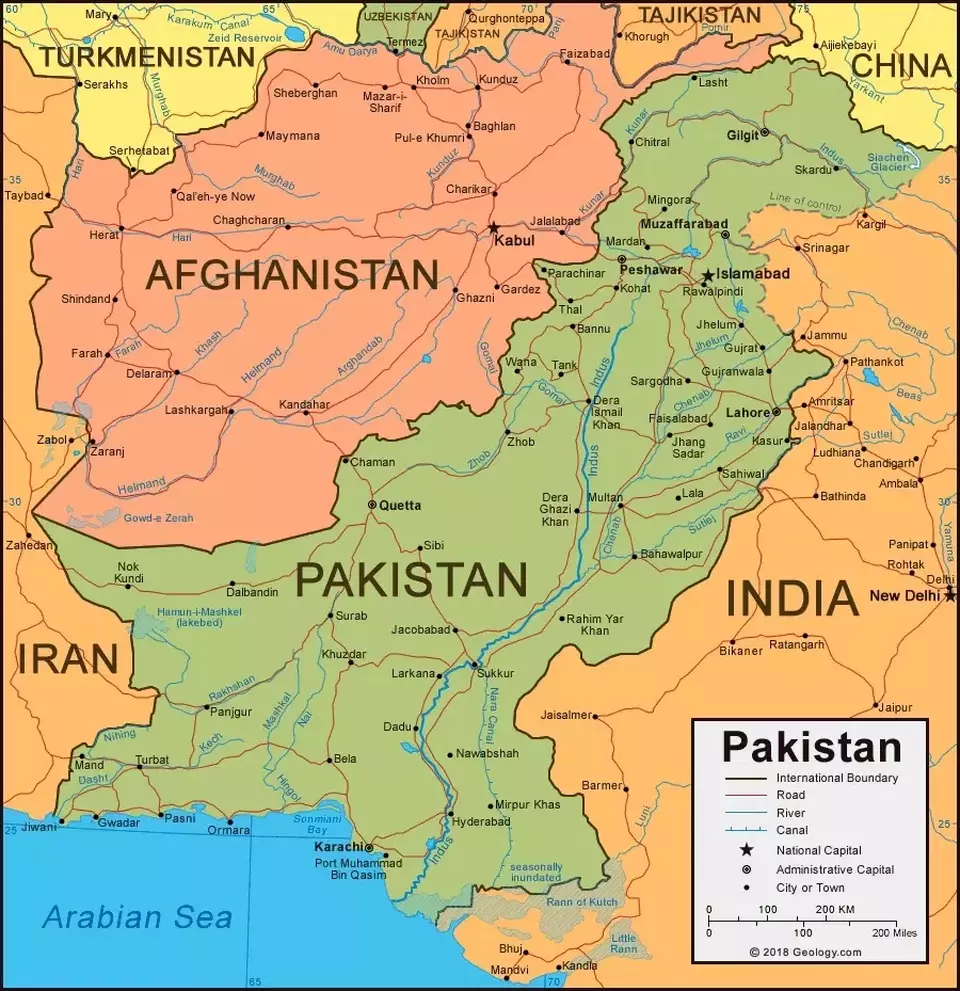
The main trigger for tensions is the Durand Line, a 2,611-kilometer border inherited from British colonial rule. Afghanistan has consistently refused to recognize this line as a legitimate international boundary. The sensitive status of this region has made strategic points such as Torkham and Spin Boldak frequent battlefields, leading to the closure of logistical access.

Relations between the two countries have also worsened due to Pakistani accusations that the leadership of the Tehreek-e-Taliban Pakistan (TTP) operates from Afghan soil. Islamabad believes this network is behind deadly attacks, including the 2014 Peshawar military school tragedy and the recent terror attack in Bajaur district.

Although the Taliban government in Kabul strongly denies this, increased militant activity since 2022 has widened the gulf of mistrust between the two countries.

Tensions escalated with the launch of Operation Ghazab Lil Haq. On Friday (February 27, 2026), Pakistan used precision airstrikes in Kabul, Kandahar, and Paktia to destroy militant strongholds. Pakistani Defense Minister Khawaja Asif called this escalation an open war.

In retaliation, Taliban spokesman Zabihullah Mujahid confirmed attacks on Pakistani military installations along the border. This tit-for-tat exchange highlights the fragility of regional security stability.

Historical Dimension and Refugees

The roots of this conflict are also influenced by the legacy of the 1979 Soviet invasion and the September 11, 2001, tragedy. For decades, the border between the two countries has been an epicenter of armed groups. This situation is exacerbated by social issues; Islamabad’s deportation of tens of thousands of Afghan refugees has fueled negative sentiment and added diplomatic pressure on Kabul.

Competition for influence in the region has further complicated the situation. Kabul’s close relationship with New Delhi (India) is often viewed with suspicion by Islamabad. Some analysts believe that increased Afghanistan-India interaction has contributed to the deterioration of trilateral security perceptions in the region.

The international community is now pressing for diplomatic dialogue. Although Afghanistan’s conventional power is considered inferior to Pakistan’s, the pattern of cross-border retaliatory attacks is expected to recur as long as the TTP and Durand Line issues remain unresolved diplomatically.

Without a robust dialogue mechanism, national sovereignty and the security of civilians on both sides of the border remain at stake in this protracted conflict.

For Tarawih Prayers at Al-Aqsa, 50,000 Palestinians Break Through Israeli Barricades

Felixnews.com – Under tight military surveillance, approximately 50,000 Palestinian worshippers crowded the Al-Aqsa Mosque compound in East Jerusalem’s Old City to perform Isha and Tarawih prayers on Sunday evening (February 22, 2026). This momentum marked the solemnity of worship amidst escalating tensions engulfing the occupied territories.

The Jerusalem Provincial Government reported that the flow of worshippers continued despite having to pass through multiple Israeli military checkpoints. Strict identity checks were carried out at every entrance to one of Islam’s holiest sites.

This year’s Ramadan prayers are taking place under a tense atmosphere. Palestinians in the West Bank face not only strict security procedures but also the threat of attacks from settlers and regular raids by Israeli soldiers.

Wafa news agency reported that Israeli authorities have issued an order banning entry to the Al-Aqsa Mosque for more than 300 Jerusalemites during the holy month.

To control the crowds, Israeli forces have increased the presence of military personnel and imposed strict age restrictions on worshippers. Access to Al-Aqsa Mosque is restricted to:

  • Children: Under 12 years old.
  • Men: Over 55 years old.
  • Women: Over 50 years old.

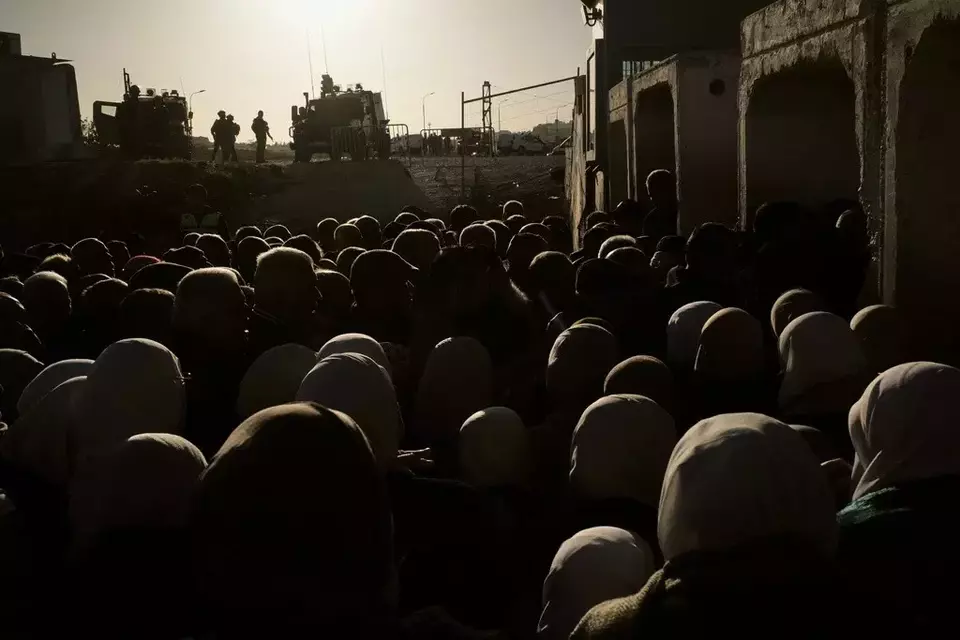
Since the beginning of Ramadan on Wednesday (February 18, 2026), thousands of Palestinians have been seen queuing at various major checkpoints, including Qalandiya and Bethlehem. They have been waiting for hours in the hope of praying at the first direction of Islam’s Qibla.

Despite the restrictions, the enthusiasm of the congregation has not diminished. One of the worshippers who managed to enter expressed his gratitude despite the grueling process.

“The lines were incredibly long, and the identity checks were nerve-wracking. But what can I do? This is a call to pray Tarawih at Al-Aqsa,” said one worshipper who wished to remain anonymous for security reasons.

To date, the situation in the Al-Aqsa Mosque compound is reported to remain under control but highly volatile, with a military presence remaining on standby in every corner of the Old City.

Al-Aqsa Mosque, Ramadan in Jerusalem, Al-Aqsa Tarawih Prayers, Al-Aqsa Access Restrictions, Ramadan 2026