Trump Reportedly Plans to Attack Iran, Here Are 3 Iranian Targets on US Radar
United States President Donald Trump has reportedly given strict instructions to his advisors regarding the Iran crisis. If diplomatic efforts fail to halt Tehran’s nuclear program, Trump is considering a full-scale military strike aimed at removing the Iranian leadership from power.
Reports compiled from internal government discussions indicate that negotiators from both countries are scheduled to meet in Geneva on Thursday (February 26, 2026). This meeting is seen as a last resort to avoid open military confrontation in the Middle East.
Although a final decision has not been made, Trump’s advisors are believed to be leaning towards a preemptive strike in the near future. The goal is to send a stern warning to Tehran to relinquish its nuclear weapons capabilities. Targets currently on the radar include:
- The headquarters of the Iranian Revolutionary Guard Corps (IRGC).
- The country’s nuclear development sites.
- Ballistic missile program facilities.
If these steps do not lead Iran to surrender, Trump has opened the possibility of a much broader military strike by the end of the year to end the rule of Supreme Leader Ali Khamenei.
Amidst the war preparations, a proposal emerged from IAEA Director General Rafael Grossi as a medical solution. This proposal would allow Iran to conduct very limited nuclear enrichment, solely for research and cancer treatment at the Tehran Research Reactor.
However, both sides remain very firm. Special presidential envoy Steve Witkoff emphasized Trump’s directive of “zero enrichment.” Meanwhile, Iranian Foreign Minister Abbas Araghchi insisted that producing nuclear fuel is his country’s legitimate right under the Nuclear Non-Proliferation Treaty.
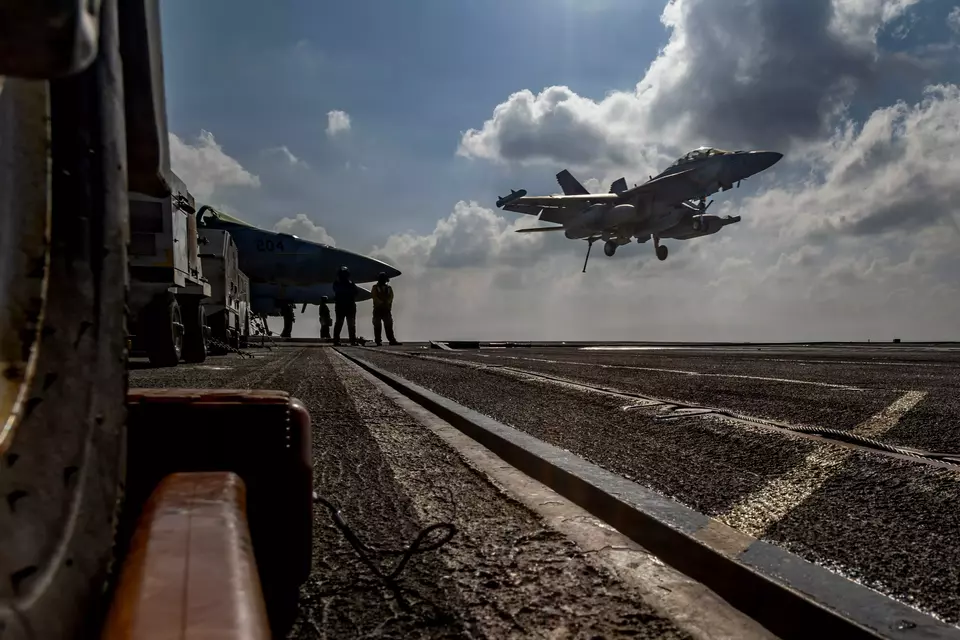
Currently, US military pressure is at its highest level. The forces deployed in the seas around Iran are said to be the largest military concentration since the invasion of Iraq 23 years ago. Two aircraft carrier strike groups, including the USS Abraham Lincoln and the Gerald R. Ford, as well as dozens of fighter jets and bombers, are now within striking distance of Iranian positions.
Vice President J.D. Vance and Secretary of State Marco Rubio are reportedly continuing to assess the operational risks of an airstrike. Iran represents a much more difficult target than the previous operation to capture Nicolas Maduro in Venezuela.
This US military action raises its own concerns. While many Iranians oppose Khamenei’s rule, a foreign attack could potentially trigger a nationalistic response that would unite the Iranian people against the US.
European officials at the Munich Security Conference expressed doubt that military pressure would force Tehran to abandon a program that has been a symbol of resistance for decades. The world now waits to see whether the Geneva meeting can produce a compromise that saves both sides face or could be the opening bell of a full-blown war.