Trump Reportedly Plans to Attack Iran, Here Are 3 Iranian Targets on US Radar
United States President Donald Trump has reportedly given strict instructions to his advisors regarding the Iran crisis. If diplomatic efforts fail to halt Tehran’s nuclear program, Trump is considering a full-scale military strike aimed at removing the Iranian leadership from power.

Reports compiled from internal government discussions indicate that negotiators from both countries are scheduled to meet in Geneva on Thursday (February 26, 2026). This meeting is seen as a last resort to avoid open military confrontation in the Middle East.

Although a final decision has not been made, Trump’s advisors are believed to be leaning towards a preemptive strike in the near future. The goal is to send a stern warning to Tehran to relinquish its nuclear weapons capabilities. Targets currently on the radar include:

  • The headquarters of the Iranian Revolutionary Guard Corps (IRGC).
  • The country’s nuclear development sites.
  • Ballistic missile program facilities.

If these steps do not lead Iran to surrender, Trump has opened the possibility of a much broader military strike by the end of the year to end the rule of Supreme Leader Ali Khamenei.
Amidst the war preparations, a proposal emerged from IAEA Director General Rafael Grossi as a medical solution. This proposal would allow Iran to conduct very limited nuclear enrichment, solely for research and cancer treatment at the Tehran Research Reactor.

However, both sides remain very firm. Special presidential envoy Steve Witkoff emphasized Trump’s directive of “zero enrichment.” Meanwhile, Iranian Foreign Minister Abbas Araghchi insisted that producing nuclear fuel is his country’s legitimate right under the Nuclear Non-Proliferation Treaty.

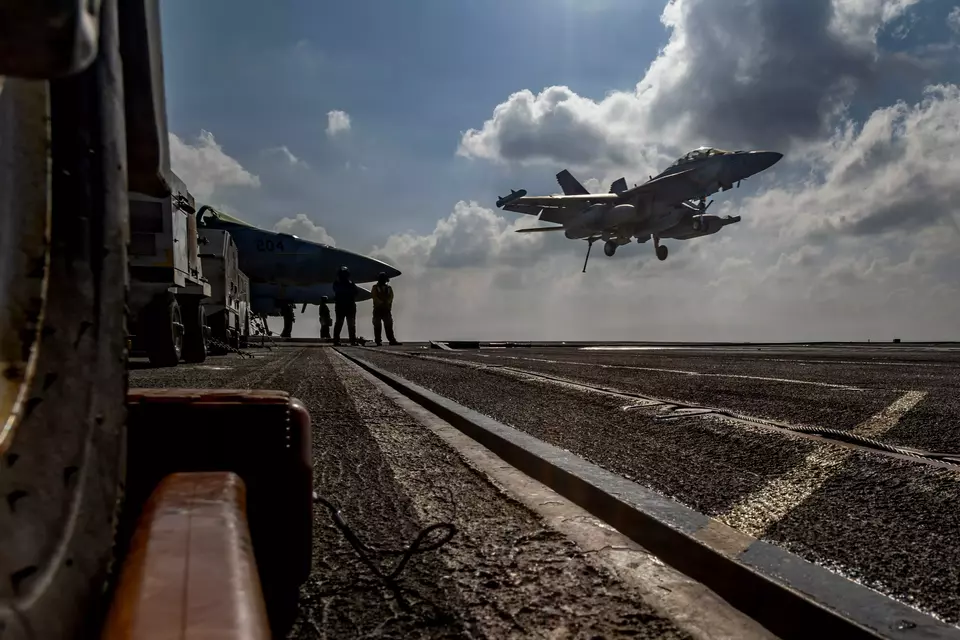
Currently, US military pressure is at its highest level. The forces deployed in the seas around Iran are said to be the largest military concentration since the invasion of Iraq 23 years ago. Two aircraft carrier strike groups, including the USS Abraham Lincoln and the Gerald R. Ford, as well as dozens of fighter jets and bombers, are now within striking distance of Iranian positions.

Vice President J.D. Vance and Secretary of State Marco Rubio are reportedly continuing to assess the operational risks of an airstrike. Iran represents a much more difficult target than the previous operation to capture Nicolas Maduro in Venezuela.

This US military action raises its own concerns. While many Iranians oppose Khamenei’s rule, a foreign attack could potentially trigger a nationalistic response that would unite the Iranian people against the US.

European officials at the Munich Security Conference expressed doubt that military pressure would force Tehran to abandon a program that has been a symbol of resistance for decades. The world now waits to see whether the Geneva meeting can produce a compromise that saves both sides face or could be the opening bell of a full-blown war.

Ayatollah Khamenei Threatens to Bury Trump’s Army

Iran’s Supreme Leader Ayatollah Ali Khamenei has issued a stern warning to the United States (US) and US President Donald Trump regarding war in the Middle East.

Khamenei warned that any attack by the US would trigger a regional war in the Middle East. The warning came after Trump threatened to attack Iran militarily for what he considered to be repressive actions against the masses during the national protests that erupted in late December 2025.

“America must realize that if they launch a war this time, it will be a regional war,” Khamenei told a crowd at his residence in Tehran on Tuesday (2/3/2026).

The 86-year-old emphasized that Iran has never disturbed, let alone attacked, any country, including the US.

“We are not instigators, we will not be unfair to anyone, and we do not plan to attack any country. However, if anyone shows greed and wants to attack or interfere, the Iranian people will deal them a heavy blow,” he said.

Earlier, at the beginning of last week, the US had deployed its war fleet, including the aircraft carrier USS Abraham Lincoln and other American warships in the Arabian Sea, which Trump sent there after thousands of people were killed in protests in Tehran.

However, at the time of writing, it remains unclear whether Trump will use military force. He has repeatedly said that Iran wants to negotiate and has raised Iran’s nuclear program as another issue he wants to resolve.

Meanwhile, Iran has also held military exercises in the Strait of Hormuz, located in the strategic Persian Gulf region, which is the commercial traffic area for almost all of the world’s oil trade.

Iran Threatens to Turn the Entire Country into a Graveyard for US Soldiers

A senior Tehran City Council official issued a stern warning to the United States on Monday (2/2/2026). Iran insisted it would respond to any military attack by Washington with an unprecedented large-scale retaliation.

Deputy Chairman of the Tehran City Council, Parviz Sarvari, stated that reports of preparations for thousands of graves for US soldiers were not just a bluff, but a symbolic message about Iran’s readiness for war.

“If they think they can attack Iran, 5,000 graves for American soldiers will not be enough, and we will turn the entire country into a graveyard for Americans,” Sarvari said, as quoted by the Mehr news agency.

This statement came following reports that the Behesht Zahra cemetery in Tehran had prepared a special site with a capacity of thousands of graves. The area was prepared as a temporary burial site for US military personnel in the event of an escalation of physical conflict.

Sarvari emphasized that Iran’s defense strategy would include direct attacks on all American assets in the region. This includes military bases, warships, and any country that provides logistical support or territory for US attacks.

He detailed that all branches of the Iranian military are on high alert. The Iranian Navy will respond if threats arise from the waters. Then the Iranian ground forces are ready to act in the event of an invasion by land.

This harsh rhetoric from Tehran adds to the long list of diplomatic tensions between the two countries. Analysts believe that the very blunt language used by city council officials indicates a consensus at the local and national levels in Iran to respond to Western military pressure with full force.

At the time of writing, the White House has not issued an official comment on the “mass grave” threat made by the Tehran authorities.

The Mehr news agency, affiliated with the government, reported on Saturday that the Behesht Zahra cemetery in Tehran had prepared a site with a capacity of several thousand graves for the temporary burial of potential US military casualties.

Iranian Rial Plummets to Lowest Point

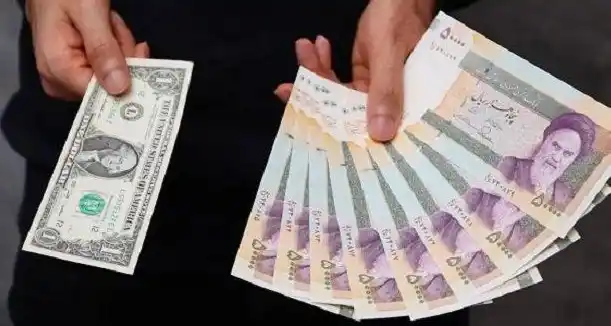
Iran’s economy has been rocked by more bad news after the value of its local currency, the rial, hit an all-time low in trading. According to reports from various international currency tracking sites quoted by AP on Tuesday (1/27/2026), the exchange rate plummeted dramatically to 1,500,000 rials per US dollar.

This currency collapse is a severe blow to the purchasing power of the Iranian people, who have long been squeezed by inflation. This record low comes just weeks after a wave of massive protests swept through various cities in the country. The growing economic uncertainty has further eroded market confidence in the domestic currency.

The plunge in the exchange rate is a continuation of a previous decline. Previously, the rial exchange rate also fell on January 14, 2026. At that time, US$ 1 was trading at around 1,429,500 rials, while 1 euro was equivalent to around 1,668,500 rials.

Now, the declining exchange rate has made it difficult for Iranians to meet their basic needs. It has even been mentioned that by the end of December 2025, the sharp decline of the rial will cause a surge in the prices of important imported goods such as wheat, cooking oil, and raw materials for medicines. The increase in import costs will be passed on directly to consumers by traders, thereby driving widespread inflation.

The weakening of the rial has been going on for years due to strict Western sanctions, corrupt practices that have eroded public trust, and the public’s rush to convert their savings into US dollars, gold, or property. Throughout 2025, the rial fell by around 45% against the US dollar.

Iran’s economic conditions were further exacerbated by the decline in world oil prices. Brent crude oil, which is the backbone of state revenue, fell by around 18% throughout 2025 and closed at around US$ 60 per barrel.