Total Lunar Eclipse March 3, 2026
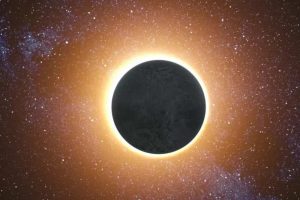
Felixnews.com – A lunar eclipse occurs when the Earth blocks sunlight from reaching the Moon. This phenomenon, a result of the dynamic movement of the Sun, Earth, and Moon, only occurs during the full moon phase and can be predicted in advance.

A total lunar eclipse occurs when the Sun, Earth, and Moon are aligned. This causes the Moon to enter the Earth’s inner shadow (umbra). At the peak of the eclipse, the Moon will appear red if the sky is clear. The Moon’s red color is caused by Rayleigh scattering in Earth’s atmosphere. Sunlight passing through Earth’s atmosphere is scattered, so short-wavelength light, such as blue, is scattered more, while longer-wavelength light, such as red, escapes and reaches the Moon’s surface, making the Moon appear red.

Following the parade of planets at the end of February, Indonesian skies are once again preparing to welcome an equally stunning natural spectacle.

On Tuesday, March 3, 2026, a total lunar eclipse, coinciding with the full Worm Moon, is predicted to envelop the Indonesian skies, turning the moon an exotic copper red.

This phenomenon is particularly special because it occurs in early 2026 and can be seen with the naked eye throughout Indonesia, from Sabang to Merauke, without the need for special equipment.

Why is it called a “Worm Moon” and a “Blood Moon”?

The term “Worm Moon” refers to the March full moon, when, in the Northern Hemisphere, the ground begins to thaw and earthworms begin to reappear.

However, during a total eclipse, the moon will transform into a Blood Moon. This red color occurs because the Earth’s atmosphere refracts sunlight and projects a red spectrum onto the Moon’s surface.

The Best Way to Watch an Eclipse

Unlike a solar eclipse, a lunar eclipse is 100 percent safe to view with the naked eye. You don’t need special glasses to view. Here are some tips to make your viewing experience more enjoyable.

Find a Clear Eastern Horizon: Since the phenomenon begins at new moonrise, make sure your eastward direction is clear of tall buildings or trees.

Minimize Light Pollution: Go to a darker area like a park or high ground to see a sharper red contrast.

Use Binoculars/Telescope: If you want to see the details of the moon’s craters hidden in shadow, a simple optical instrument will be very helpful.

Capture it with Night Mode: Use a tripod and your phone’s night mode to capture this rare moment.