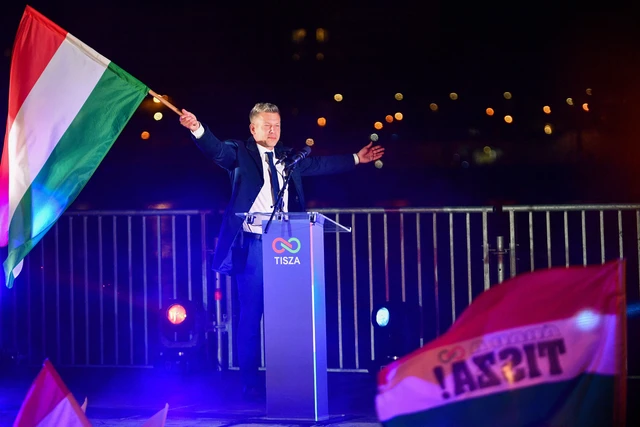
Felixnews.com – Peter Magyar’s victory in the Hungarian elections on Sunday (April 12, 2026) was immediately greeted with great fanfare by European leaders.
For them, this result is not merely a change in power, but a strong signal that Hungary is finally back on track with the European Union after years under the shadow of Prime Minister Viktor Orban’s leadership.
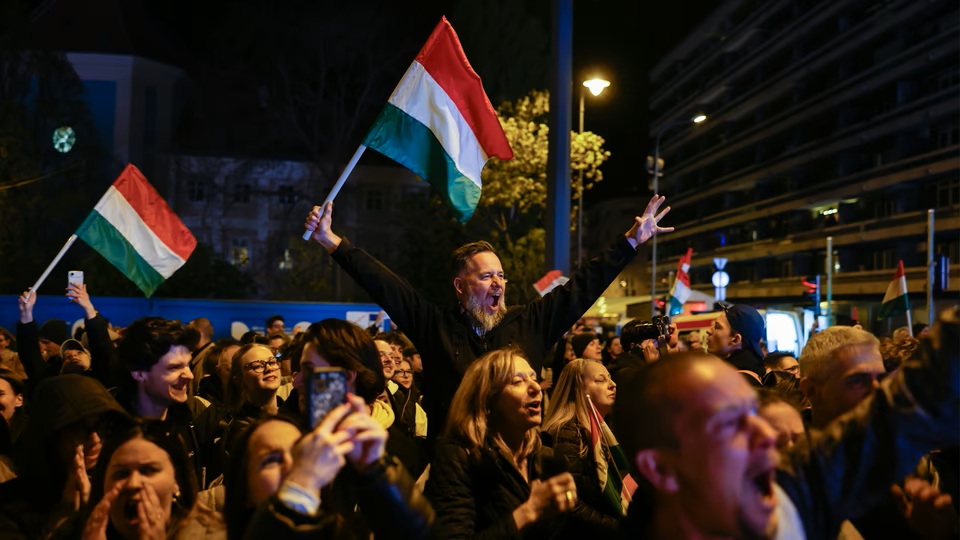
Congratulations poured in from various European capitals just moments after the election results were announced.
Spanish Prime Minister Pedro Sanchez called the victory a triumph of European values. Meanwhile, Polish Prime Minister Donald Tusk welcomed it with the call “Back together!”, signaling hope for Hungary’s return to the mainstream of European politics.
French President Emmanuel Macron, NATO Secretary General Mark Rutte, European Commission President Ursula von der Leyen, and German Chancellor Friedrich Merz are said to have contacted Magyar directly even before he took the victory stage.
This wave of support underscores just how significant the Hungarian election results are for the region’s stability and geopolitical direction. A growing narrative in Europe is that Hungary is now “back.”
Von der Leyen stated that Hungary has chosen Europe, while British Prime Minister Keir Starmer called this moment a milestone for democracy.
Even within the ranks of Europe’s main political party, the European People’s Party, there is a consensus that Hungary is now back at the heart of Europe.
This euphoria stems from long-standing frustration with Orbán. During his 16 years in power, he has often been a stumbling block within the European Union, repeatedly vetoing collective policies, including those related to support for Ukraine.
His closeness to Russia and reports of unofficial communication channels with Moscow have further deepened tensions between Budapest and Brussels.
Consequently, Magyar’s victory is seen as a political relief for the European Union.
Furthermore, this outcome is also believed to shake the global network of right-wing populism, which has long regarded Orban as one of its central figures.
European politicians have described this defeat as a signal that such a political model is beginning to lose its appeal.
Amid high expectations, Magyar himself has adopted a relatively cautious approach.
He has promised to improve Hungary’s relations with the European Union, but has not firmly committed to positions on a number of sensitive issues, such as support for Ukraine or controversial social policies.
Nevertheless, the response in Europe has not been entirely uniform. Italian Prime Minister Giorgia Meloni has continued to express her appreciation to Orban for their cooperation thus far.
Meanwhile, French right-wing politician Jordan Bardella has highlighted Orban’s achievements without mentioning the Magyar victory. This indicates that ideological divides in Europe have not entirely disappeared.
Reactions also came from outside the region. Israeli opposition leader Yair Lapid offered his congratulations. Meanwhile, Ukraine conveyed a symbolic message about European unity through its diplomatic statement.