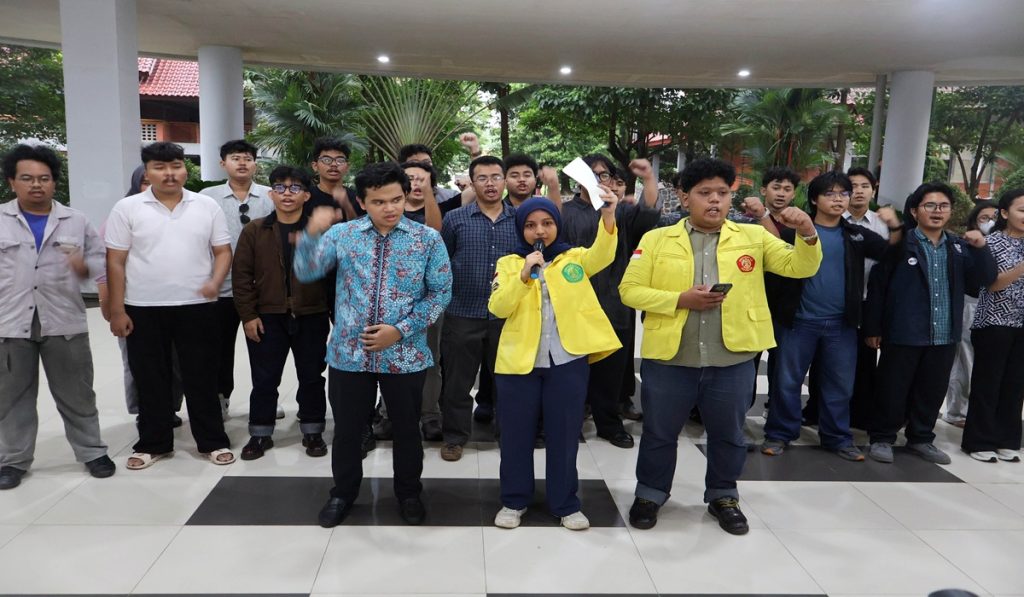
Jakarta – A total of 16 students from the Faculty of Law, University of Indonesia, were involved in sexual harassment. In fact, this case has been verified as a genuine case currently under investigation. University officials, including the Faculty of Law and the University of Indonesia, have acknowledged the reports and are conducting a formal investigation in collaboration with the PPKS Task Force.
In fact, the university has explicitly condemned actions that degrade human dignity and potentially violate the law. So what are the facts and details? We outline them here.
Is it true that 16 UI Law students were involved?
This case didn’t emerge suddenly. Initially, a report emerged after the sexual harassment was uncovered in a boarding house chat group. According to the student executive body (BEM FH UI) and the victim’s attorney, the group began as a boarding house chat group that had existed since 2024. However, over time, the conversation within the group evolved into one that demeaned women.
That’s where the report came in, and the case escalated. By 2025, the alleged harassment was said to have been ongoing. Ironically, most of the victims and perpetrators were in the same social circle.
Latest Chronology
They were known to be classmates. Some were even in the same class. Furthermore, the victims came from various levels, from juniors to lecturers. In April 2026, the case exploded into public consciousness after screenshots of the conversation circulated on social media.
On April 12, 2026, the UI Faculty of Law officially received the report and immediately conducted an investigation and verification. Since then, the investigation has been ongoing, involving the Faculty and the UI PPKS Task Force.
Form of Alleged Violations
The number of alleged violations is not small; 16 students are suspected of being involved in various forms of violations. These take various forms, ranging from verbal harassment and sexual comments to demeaning women.
Digital harassment, including inappropriate discussions in group chats, is also included. The latest developments from the victim’s attorney, even though the number of victims could reach 27, including students and lecturers, mean. This means this is no mere internal joke, but falls into the category of gender-based sexual violence. Although some of it occurred in the digital space.
Status of Handling and Potential Sanctions
What sanctions? Well, there are two avenues currently being discussed and developed: campus and criminal.
From the campus perspective, UI emphasized that if the perpetrators are proven guilty, they could face academic sanctions, ranging from scouring to expulsion. This handling refers to Permendikbutristek No. 30 of 2021 concerning PPKS, Internal Campus Regulations, and the Academic Code of Ethics.
However, it’s important to note that so far the process is still predominantly within the realm of campus ethics and administration. Not all those involved or perpetrators will automatically be subject to criminal charges. This depends on the results of further investigations.
Protection and State Response
The Chairperson of the National Commission on Violence Against Women, Maria Ulfah Ansor, expressed deep concern over this case. The perpetrators were students studying important issues, such as human rights.
Martha Barton, also a law student at the prestigious Faculty of Law in Indonesia, encouraged the university to go beyond superficial handling and further investigate the possibility of similar forms of violence outside of group chat rooms.
Furthermore, the university’s primary focus should not be solely on punishing the perpetrators. UI emphasizes that the victim’s identity must be protected. Victims receive psychological support. Legal and academic processes are safeguarded so that victims can continue their studies safely. This is crucial, because in many cases of sexual violence on campus, victims often experience secondary social pressure.
This case demonstrates one important point: sexual harassment on campus isn’t always physical; it can begin with words, conversations, or even closed chat groups.
And when this happens, the impact is real, not only on the victim, but also on the integrity of the educational institution itself. Because this is the Faculty of Law, a place where people learn about justice, the public expects higher ethical standards.
Timotis Rejagogok, the attorney for the victims of sexual harassment by 16 FHAU students, stated that the victims are still afraid of the issues that have occurred. He hopes the wider community will respect the victims’ privacy.