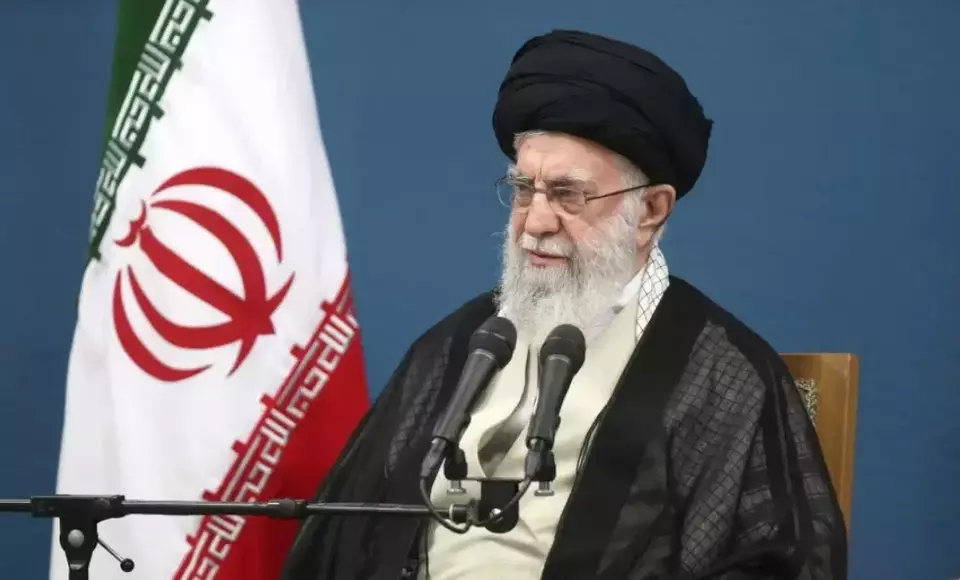
Felixnews.com – The news of the death of Iran’s Supreme Leader Ayatollah Ali Khamenei in an air strike allegedly carried out by US and Israeli forces on Saturday (28/2/2026) shook the international community.
The attack drew widespread condemnation, including from Russian President Vladimir Putin, who officially declared the action a violation of human morality and international law.
The Iranian government and a number of other countries have called Ali Khamenei’s death an act of terrorism and a violation of the United Nations Charter.
Amidst the wave of condemnation, what is the international legal view on the assassination of a state leader? Here’s the explanation.
1. Prohibition on the Use of Force Between States
The UN Charter is the main foundation of modern international law. Article 2, paragraph (4) of the UN Charter stipulates that all UN members must refrain from the threat or use of force against the territorial integrity or political independence of another state.
This means that, in general, states are not permitted to conduct military attacks against other states without a clear legal basis. There are only two main exceptions:
The right of individual or collective self-defense in the event of an actual armed attack (Article 51 of the UN Charter).
Authorization of the use of force through the UN Security Council under Chapter VII to maintain or restore international peace and security.
If a military action, including the assassination of a state leader, does not meet these two criteria, it is considered to violate the prohibition on the use of force.
2. Assassination vs. Targeted Killing
In international legal studies, the terms assassination and targeted killing are frequently discussed, although they do not have a single, universally agreed-upon definition. The assassination of high-ranking state officials without legal approval or mandate is considered illegal under the general norms and ethics of international law.
Many studies have stated that such actions may violate international law, especially if carried out outside the context of a legitimate armed conflict or without strong legal justification.
In certain situations of armed conflict, a number of countries attempt to distinguish between illegal assassinations and targeted killings of individuals deemed to pose a military threat under the laws of war.
However, various academic studies have shown that the legality of assassinating state leaders for military reasons remains highly controversial and risks being interpreted as an extrajudicial execution.
3. The Qasem Soleimani Case
The 2020 assassination of Iranian General Qasem Soleimani by the US is often cited. At the time, the US government claimed the action was part of its right to self-defense.
However, many international legal experts and UN representatives have argued that the attack likely violated international law, particularly because it lacked authorization from the host country or UN Security Council approval.
The UN Human Rights Commission has even stated that such actions potentially violate international law, including human rights law, especially if viewed as an extrajudicial execution.
4. Humanitarian Law and Armed Conflict
International Humanitarian Law (IHL), including the Geneva Conventions, regulates the use of force in armed conflict and the protection of non-combatants.
However, IHL does not legitimize a state to unilaterally assassinate the leader of another state outside the clear context of the laws of war.
In all circumstances, international human rights law guarantees the right to life as a fundamental human right. A state that commits or orders an assassination outside of a legitimate legal mechanism may be considered a human rights violation.
Mechanisms of International Responsibility
The Role of the UN and the Security Council
In the event of an alleged violation of international law, the aggrieved state can pursue legal recourse through a UN Security Council resolution to declare the violation and impose sanctions or diplomatic measures, as well as an application to the International Court of Justice (ICJ) to obtain a legal ruling on the alleged violation of the UN Charter.
However, this process is often influenced by global political factors, given that the permanent members of the Security Council have veto power.
International Criminal Court (ICC)
Under the Rome Statute, the International Criminal Court (ICC) has the authority to prosecute individuals, including heads of state, for war crimes, crimes against humanity, genocide, and the crime of aggression.
The Rome Statute explicitly states that there is no immunity from office for individuals convicted of these serious crimes.
Is the Assassination of a State Leader Justified?
Under contemporary international law, the assassination of another state’s leader without approval, without a mandate from the UN Security Council, and without a valid legal justification is generally not justified.
The principle of state sovereignty, the prohibition on the use of force in the UN Charter, and the protection of the right to life provide strong grounds for rejecting such actions.
Iran’s request to the UN to condemn threats against its previous leaders demonstrates that threats against heads of state are viewed as serious violations of international principles.
If the assassination of a state leader is deemed to violate international law, possible responses include:
- The aggrieved state filing a formal claim with the UN or the International Court of Justice.
- An independent investigation to determine whether there has been a violation of international law or a war crime.
- International sanctions such as embargoes, diplomatic restrictions, or collective action through the UN Security Council.
- De-escalation efforts and diplomatic dialogue to defuse tensions.
The Impact of the Ali Khamenei Case on the Global Order
The assassination of Ali Khamenei in an attack attributed to the US and Israel has been criticized by several countries as a violation of the principles of sovereignty and international law. Many believe this action has the potential to set a dangerous precedent if not legally enforced.
Under the current international legal framework, the assassination of a foreign leader without a clear legal basis, such as a UN Security Council mandate or the widely recognized right of self-defense, is unjustified.
The Iranian government called the incident an act of terrorism and premeditated murder that violates the principles and norms of international law, including the UN Charter.
The global reaction, condemning and questioning this action, emphasizes the importance of upholding the supremacy of international law, respecting the territorial integrity of other states, and preventing precedents that could undermine the rules-based world order.
Steps such as an independent investigation, filing a claim with the UN or the ICC, and diplomatic de-escalation are crucial to ensuring the principles of international law are upheld.