Tensions between Iran and the United States (US) have once again heated up and become a focus of international attention. The long-standing, unresolved issue of Iran’s nuclear program has once again dominated the global diplomatic agenda.
The United States and its allies believe Iran’s nuclear activities have the potential to exceed peaceful objectives, while Iran insists that all uranium enrichment is solely for energy and civilian research.
Amidst this geopolitical tug-of-war, one term continues to emerge and become the center of global debate: uranium. This element is not simply a mined commodity, but a strategic element with major implications for energy, national security, and global stability.
To understand why uranium is so contested in the Iran-US conflict, here’s an explanation.
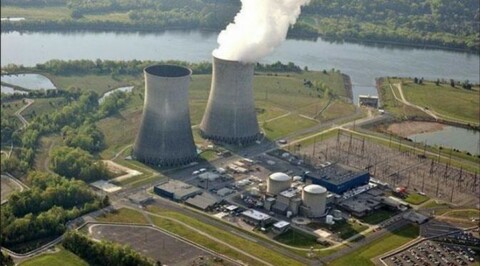
The Iran-US Conflict and the Persistent Nuclear Issue
The relationship between Iran and the United States has long been marked by political and ideological tensions. One of the most crucial points in the relationship between the two countries is Iran’s nuclear program, which has begun to receive serious international attention since the early 2000s.
Western countries, particularly the United States, are suspicious that Iran’s nuclear technology development could potentially be directed towards the development of nuclear weapons.
On the other hand, Iran has repeatedly asserted that it has the full right as a sovereign nation and a signatory to the Nuclear Non-Proliferation Treaty (NPT) to develop nuclear technology for peaceful purposes.
The Iranian government has openly stated that its nuclear program is focused on meeting national energy needs and civilian research, including medical purposes.
However, Iran has also demonstrated a firm stance in defending its right to independently enrich uranium domestically. Tehran refuses to halt the enrichment process and asserts that uranium enrichment is a non-negotiable part of its national sovereignty.
Iran has also stated that it has no intention of exporting enriched uranium and has rejected a number of diplomatic options involving the transfer or processing of nuclear material outside its territory.
In this context, uranium becomes a highly sensitive issue, as this element has dual-use properties, being able to be used for power generation and potentially as a raw material for nuclear weapons, depending on the level of processing.
What is Uranium?
Uranium is a naturally occurring chemical element found in the Earth’s crust and is radioactive. In the periodic table, uranium has the symbol “U” and is known as one of the heaviest elements still found naturally.
In its raw state, uranium is not immediately dangerous to humans, but its radioactive nature requires very strict procedures for its management, storage, and utilization.
Naturally, uranium consists of several isotopes. The two most well-known isotopes are uranium-238 and uranium-235. Of the two, uranium-235 plays the most important role because it can undergo nuclear fission, the process of splitting an atomic nucleus that releases enormous amounts of energy.
The difference in isotope content determines uranium’s function, whether it is used for civilian energy needs or military purposes.
Why Uranium is So Important in Nuclear Technology
Uranium’s primary role lies in its ability to produce large amounts of energy through nuclear reactions. In nuclear power plants, uranium is used as fuel to heat water, produce steam, and drive turbines to generate electricity.
This process is considered highly efficient and produces significantly lower carbon emissions than fossil fuels. However, this property also makes uranium a highly sensitive element.
If uranium is enriched to a very high level, it can be used as the core of a nuclear weapon. Therefore, mastery of uranium technology is always under strict international scrutiny, particularly by the International Atomic Energy Agency (IAEA).
In the Iran-US conflict, the difference of opinion lies not so much in the presence of uranium itself, but rather in the extent to which it is enriched and for what purpose.
Uranium enrichment is the process of increasing the uranium-235 content in naturally occurring uranium. Naturally, uranium contains only about 0.7% uranium-235. To be used as fuel for nuclear power plants, this content is typically increased to around 3% to 5%.
Problems arise when the enrichment level exceeds this limit. Uranium with an enrichment level above 20% is considered close to the technical threshold for military use. Meanwhile, enrichment to around 90% is generally associated with the production of nuclear weapons.
In the context of Iran-US tensions, the primary concern of the United States and its allies lies in the potential for dual-use uranium. The same technology used for peaceful purposes could theoretically be diverted toward weapons development if not strictly and transparently monitored.
Uranium in an International Legal Perspective
Under international law, there is no absolute prohibition on a country possessing uranium or developing nuclear technology. Through the NPT, non-nuclear states, including Iran, are permitted to develop nuclear energy for peaceful purposes, provided they comply with an international oversight system.
This oversight includes inspections of nuclear facilities, reporting of uranium stockpiles, and transparency in the enrichment process. Iran-US tensions often escalate when one party perceives this oversight mechanism as not functioning optimally, either due to limited inspection access or differing interpretations of the agreement.
The Iranian uranium issue is not merely a bilateral issue between Iran and the United States but one with global implications. Any significant increase in Iran’s nuclear capacity has the potential to affect the balance of power in the Middle East and trigger a chain reaction from other countries in the region.
Furthermore, this issue also concerns the credibility of the global nuclear nonproliferation system. If a country is deemed to have crossed a line without clear consequences, it could undermine confidence in the international rules that have served to prevent the spread of nuclear weapons.
Uranium is a simple element in its scientific definition, but extremely complex in its implications. In the Iran-US conflict, uranium is more than just a mineral; it is a symbol of geopolitical rivalry, international trust, and the fine line between peaceful uses and threats to global security.