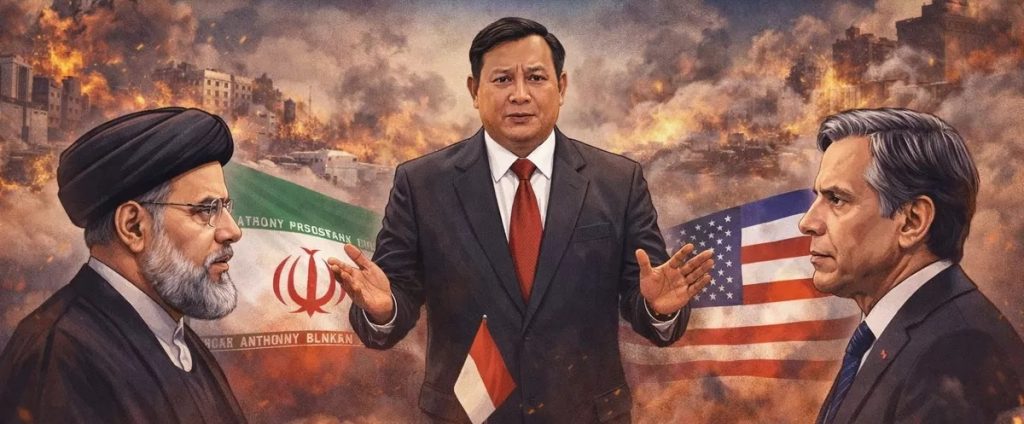
Amid escalating tensions in the Middle East, Indonesian President Prabowo Subianto has expressed Indonesia’s readiness to mediate between the United States (US) and Iran. This diplomatic move comes amid rising military tensions between the US-Israel and Iran, which have had a widespread impact on global stability.
Through an official statement on the X platform (formerly Twitter), the Indonesian Ministry of Foreign Affairs (Kemenlu) expressed deep concern over the deteriorating global security situation due to the failure of previous negotiations.
“Indonesia deeply regrets the failure of negotiations between the US and Iran, which has led to military escalation in the Middle East. Indonesia calls on all parties to exercise restraint and prioritize dialogue and diplomacy,” wrote the Indonesian Ministry of Foreign Affairs on Saturday (2/28/2026).
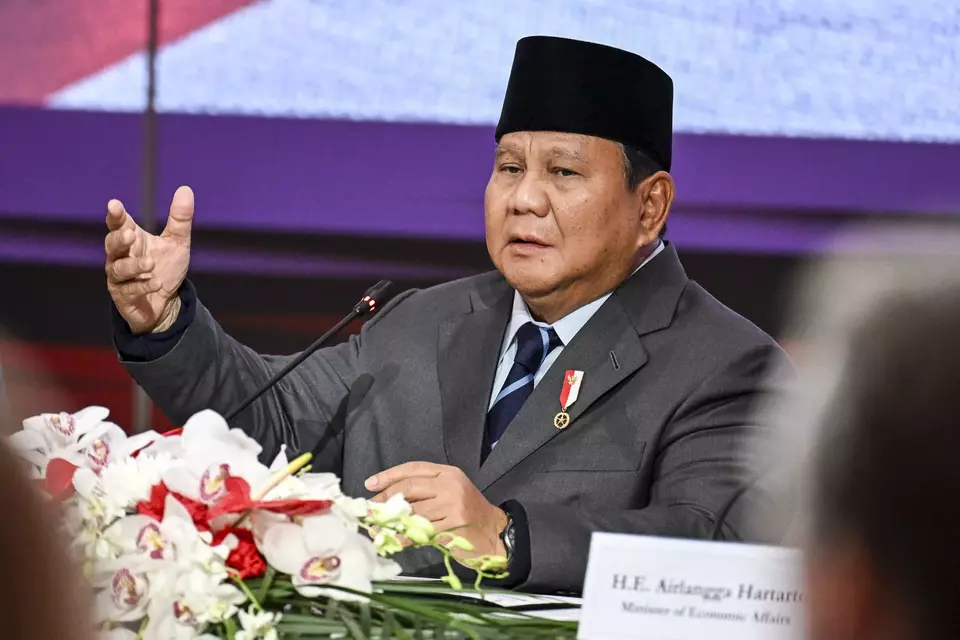
Independent and Active Foreign Policy
As a country with the principle of an independent and active foreign policy, Indonesia offered to facilitate dialogue to prevent a wider open war. President Prabowo believes that Middle East stability is directly correlated with global security and peace.
In the statement, Indonesia even offered concrete steps.
“The Indonesian government, particularly the President of the Republic of Indonesia, expressed its readiness to facilitate dialogue to rebuild a conducive security situation,” the statement read.
Furthermore, President Prabowo also expressed his willingness to make a direct diplomatic visit to Tehran if necessary.
“If agreed by both parties, the Indonesian President is willing to travel to Tehran to mediate,” added the Indonesian Ministry of Foreign Affairs.
This step is seen as a proactive diplomatic maneuver by Indonesia in response to the US-Iran conflict, which has the potential to destabilize the global economy, including global oil prices and energy stability.
Dino Patti Djalal’s Criticism
However, the mediation discourse has drawn criticism. Former Deputy Minister of Foreign Affairs Dino Patti Djalal considered the idea unrealistic.
“I wonder why this idea wasn’t filtered before being announced, because it’s highly unrealistic,” said Dino Patti Djalal, as quoted by Beritasatu.com, Sunday (March 1, 2026).
Dino offered several reasons. First, historically, the United States rarely accepts third-party mediation when launching military operations.
“America’s ego as a superpower is too high to accept that. I also believe President Donald Trump doesn’t want Indonesia to intervene this time because he’s currently obsessed with overthrowing the Iranian government,” he explained.
Dino also touched on the dynamics of US domestic politics, including the Epstein Files issue, which he said has put additional pressure on President Trump.
Second, he believes the relationship between Indonesia and Iran is not yet strong enough to support a mediation role. In the past 15 months, President Prabowo has not met directly with the Iranian president or made a bilateral visit to Tehran.
“Foreign Minister Sugiono has also never made a bilateral visit to Tehran, although he did meet once with the Iranian foreign minister in Geneva,” he said.
Third, Dino believes that both President Trump and US Secretary of State Marco Rubio will almost certainly refuse to visit Tehran.
“This is unrealistic and unlikely to happen. We must be honest about this,” he stressed.
Fourth, he believes that President Prabowo is also unlikely to meet Israeli Prime Minister Benjamin Netanyahu in the context of the conflict because it would pose a political risk domestically and could be “political suicide.”
According to Dino, what is more important is Indonesia’s consistent stance on the principles of international law.
“We must have the courage to declare what is right, right, wrong, wrong, whatever the risk,” he said.
He emphasized that if Indonesia doesn’t dare to criticize a superpower, the principle of an independent and active foreign policy could lose its meaning.
Jusuf Kalla’s Response
Former Vice President Jusuf Kalla (JK) also responded to the mediation plan. He assessed that the effort would not be easy to implement.
“Unfortunately, Indonesia has entered into an unequal agreement, and it is very detrimental to Indonesia. That alone means we are not equal to America. How can we reconcile unequal people in this situation?” Kalla said in Jakarta, as quoted by Antara, Sunday (March 1, 2026).
According to Kalla, President Prabowo’s intentions are commendable, but the geopolitical reality is far more complex.
“The plan is good, but this situation is a much bigger problem,” he said.
He added that conflicts in the Middle East always involve complex global interests. Even the decades-long Israeli-Palestinian conflict has yet to find a permanent solution.
“Israel and Palestine cannot even be reconciled, it’s difficult to achieve peace, because the world is largely determined by America’s stance,” said JK.
Indonesia Must Actively Promote Peace
Deputy Chairman of Commission I of the House of Representatives, Dave Laksono, stated that Indonesia cannot simply remain neutral. According to him, an independent and active foreign policy demands an active role in promoting peace.
“As a country with an independent and active foreign policy, Indonesia has a moral responsibility not only to remain neutral, but also to actively promote peace,” he said, Monday (March 2, 2026).
Dave stated that diplomacy can be conducted through international forums, such as the United Nations (UN) and the Organization of Islamic Cooperation (OIC). Indonesia can also offer to host mediation.
“With this approach, Indonesia can play a constructive role in mitigating conflict while demonstrating moral leadership at the global level,” he said.
Test of Indonesia’s Foreign Policy Consistency
The US-Iran conflict involving Israel is now a test of Indonesia’s foreign policy consistency. On the one hand, Indonesia is striving to play the role of peace mediator. On the other hand, questions arise regarding the realism of diplomacy and Indonesia’s bargaining position amidst global geopolitical dynamics.
This issue is also closely related to the impact of the Middle East conflict on global oil prices, energy stability, and the economic growth of developing countries, including Indonesia.
President Prabowo’s move to offer mediation reflects Indonesia’s ambition to emerge as a global diplomatic actor. However, its effectiveness will be largely determined by the response of the conflicting parties and Indonesia’s consistency in upholding the principles of independence and international law.